Stadt der Speere
Sympathisch. Erstaunlich. Schön.
Sympathisch. Erstaunlich. Schön.

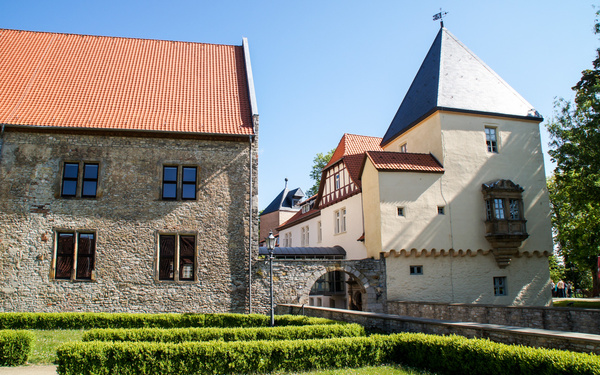
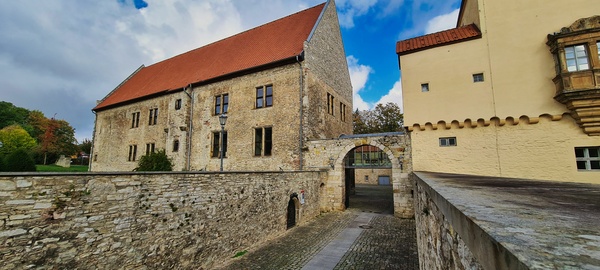
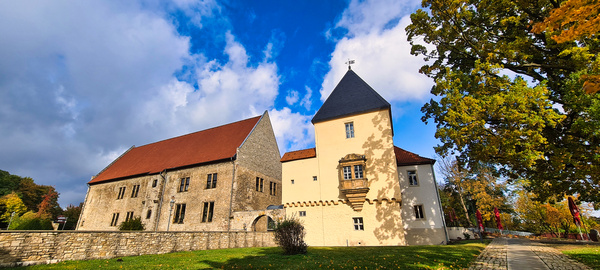
Schloss Schöningen - Das Schloss wurde um 1350 von Herzog Magnus als Grenzbefestigung gegen die Bistümer Magdeburg und Halberstadt gegründet. Es bildete eine von Wall und Graben umgebene, im wesentlichen quadratische Anlage.
Seine größte Bedeutung erlangte das Schloss zwischen 1568 und 1658, als es als so genanntes Leibgedinge von drei Braunschweiger Herzoginnen während ihrer Witwenschaft bewohnt wurde:
Das Schloss diente danach als Amtssitz, als Landesbefestigung und später bis 1970 als Domäne. Die teilweise verfallenen Anlagen wurden ab 1978 von der Stadt Schöningen aufgekauft und mit großem Bemühen, die bauhistorische Substanz zu erhalten, ihrer heutigen Verwendung zugeführt.
Geschichte des Schöninger Schlosses:
Schöningen Castle was founded around 1350 by Duke Magnus of Brunswick-Lüneburg as a border fortification against the Archbishopric of Magdeburg and the Bishopric of Halberstadt. The original complex was roughly square in shape, surrounded by a wall and moat.
The castle reached its greatest significance between 1568 and 1658, when it served as a widow’s residence (“Leibgedinge”) for three Brunswick duchesses:
1568–1575: Sophie of Poland, wife of Duke Heinrich II the Younger and sister of *King Sigismund II of Poland.
1613–1626: Elisabeth of Denmark, sister of King Christian IV of Denmark. Her brother was defeated by Tilly at the Battle of Lutter am Barenberge in 1626 during the Thirty Years’ War. Together with her son, Christian of Halberstadt, she made significant alterations to the castle complex.
1628–1659: Anna Sophie of Brandenburg, widow of Duke Friedrich Ulrich, also resided at the castle.
After this period, the castle served as an administrative center and regional stronghold until its conversion into a state domain in 1970. The partially dilapidated structures were acquired by the City of Schöningen in 1978, which subsequently launched major restoration efforts to preserve the historic fabric and adapt the buildings for new uses.
The Palas—the main building once housing the ducal living quarters and administrative offices—now functions as a banquet hall, theatre, music venue, and event space.
The western wing, known as the Gärtnerhaus (“Gardener’s House”), contains dressing rooms and support facilities for the Youth Recreation Centre. The northern wing, called the Pferdestall (“Stable”), has housed the Youth Recreation Centre since 1984, as well as the Herzoginnen Hall and Knappen Hall, which are used for social and cultural events. The eastern wing includes the tenant’s house, built in 1911, which served as the residence of the estate tenant until 1970. Today, it contains a castle restaurant and seminar rooms.
In the southeast corner stands the Grey Tower, which houses a chapel on the first floor. The chapel features a star vault with keystones depicting symbols of Jesus Christ and the four Evangelists. During restoration work, expressive 19th-century pseudo-architectural murals were discovered and carefully restored. The chapel now serves as a ceremonial reception hall, particularly popular for weddings.
In the northern section of the eastern wing, known as the Wachhaus (“Guardhouse”), additional seminar rooms and guest accommodations have been created, along with the Hausmannsturm tower.
748: Pippin III, father of Charlemagne, camps near Schöningen – the town’s first documented mention.
784: Charlemagne passes through Schöningen with his army.
994/995: Emperor Otto III visits the royal court several times – the site of today’s St. Lorenz Monastery Estate.
Around 1350: Duke Magnus of Brunswick-Lüneburg establishes Schöningen Castle as a hunting lodge and border fortress.
16th–17th centuries: The castle becomes the residence of widowed Brunswick duchesses and is expanded into a major complex. Schöningen becomes an official ducal residence.
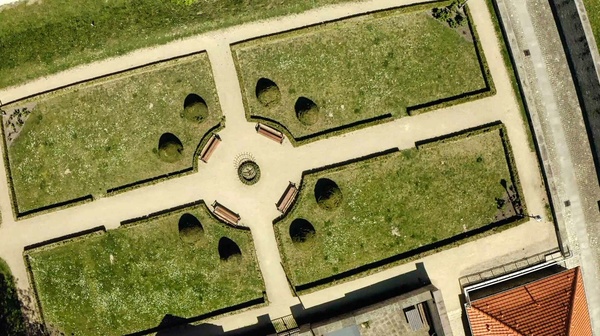
1568–1575: Duchess Sophie of Poland, sister of King Sigismund II, lives at the castle after the death of Duke Henry II the Younger. She designs the famous pleasure garden, which no longer exists.
1613–1626: Duchess Elisabeth of Denmark, sister of King Christian IV and mother of Christian the Younger of Halberstadt, resides here after the death of Duke Heinrich Julius. She remodels the castle in the Renaissance style, rebuilding the west and north wings.
1628–1659: Duchess Anna Sophie of Brandenburg, separated from Duke Friedrich Ulrich (d. 1634), rules the castle almost independently and founds the Latin School on the market square.
1661: Duke Augustus orders the dismantling of the castle and the demolition of the armoury.
1679–1683: Anna Sophie, daughter of Duke Anton Ulrich of Brunswick and wife of Margrave Karl Gustav of Baden-Durlach, resides in the castle.
7 June 1733: Frederick the Great stays overnight at the castle en route to his wedding on 12 June with Elisabeth Christine of Brunswick-Bevern.
1815: The official residence is transferred from Schöningen to Helmstedt. The castle becomes a domain estate, and the buildings gradually fall into disrepair.
1970: The state of Lower Saxony sells the castle buildings to private owners; the city acquires the surrounding grounds, which are converted into parking areas.
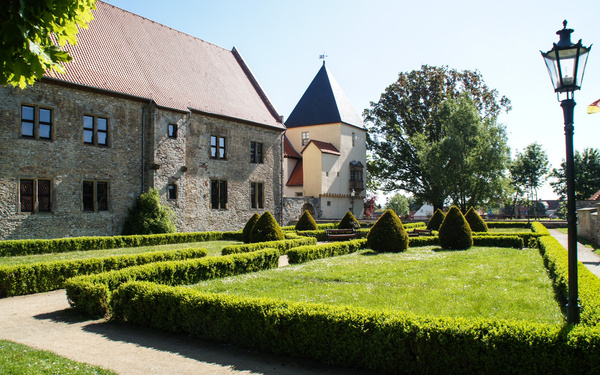
1978–1983: The city purchases three wings of the castle complex—including the main palaceand southern court garden—and begins restoration.
1984: The stables are converted into a Youth Recreation Centre, and an Information Centre of the “Indivisible Germany” Board of Trustees is established (active until German reunification). The Duchess Hall is created.
1985: The city acquires the tenant’s house (built in 1911) and begins restoring the Palas, tenant’s house, and Gardener’s House.
1996: The City of Schöningen opens the castle complex to the public.
2000: The Guardhouse, cultural fortress, and Baroque garden are restored.